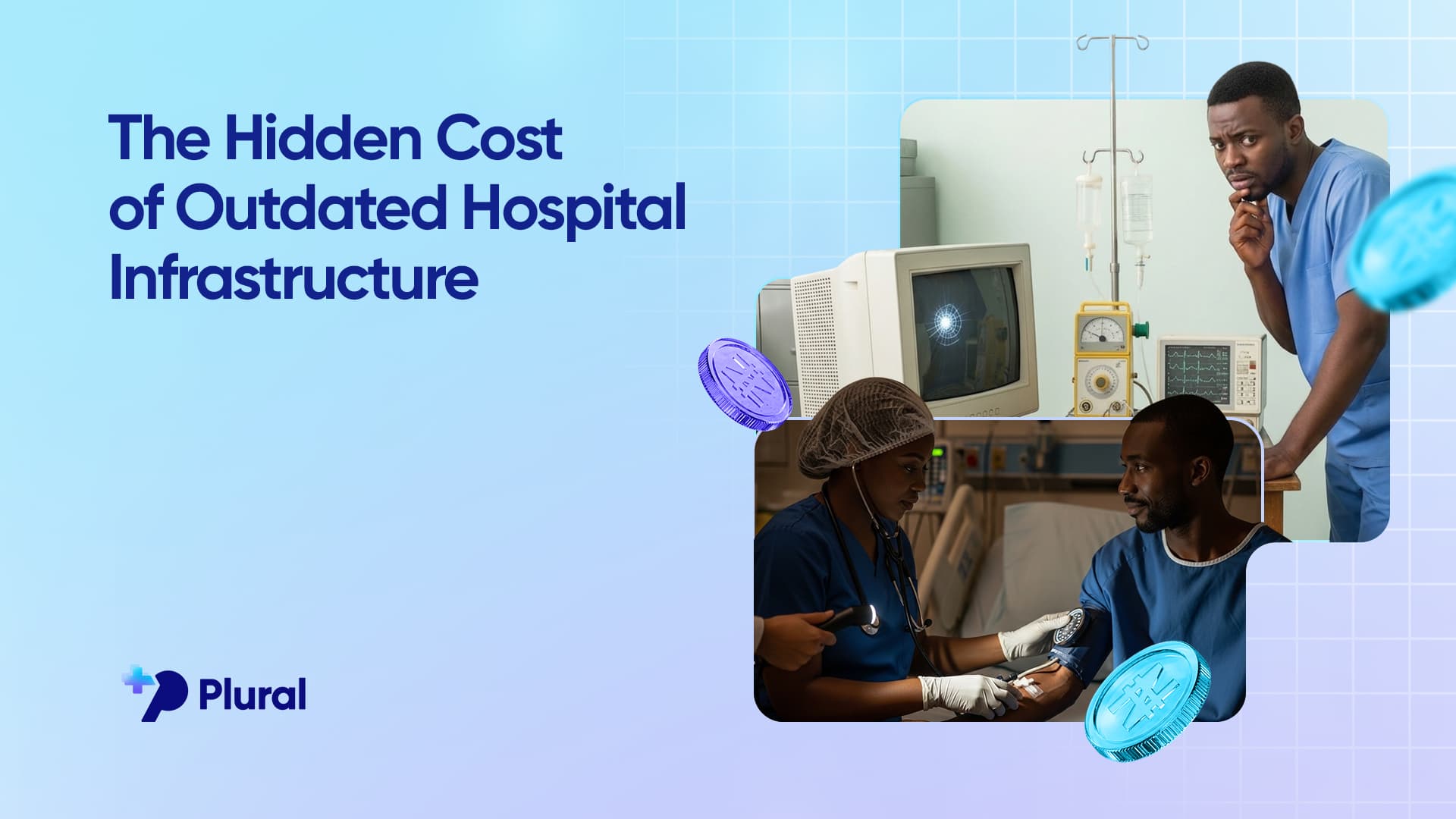
The Hidden Cost of Outdated Hospital Infrastructure
Your hospital collected ₦12 million last month.
You should've collected ₦15 million.
Not because patients didn't pay. They did. But the billing clerk is still sorting through handwritten registers from three weeks ago, trying to match treatment notes to pharmacy slips to procedure records.
The work was done. The care was delivered. But ₦3 million is stuck somewhere in the paper trail.
This isn't a hospital problem. It's a Nigerian hospital reality. So normal that most people don't even see it as a problem anymore.
But a 50-bed hospital loses an average of ₦2.3 million annually in unbilled services and delayed collections not from lack of care, but from workflows that can't keep up.
The cost is real. And it's quietly bleeding hospitals dry.
The Paper Trail That Slows Everything Down
A patient is discharged. The doctor writes the final note. The nurse updates the treatment sheet. The pharmacy records the medications dispensed.
All on paper. In different places.
When it's time to generate the bill, someone has to gather all those pieces, cross-check them, calculate costs manually, and hope nothing was missed.
If the patient has insurance, add another layer: photocopying documents, filling forms, submitting claims, waiting for approval, sometimes for months.
Meanwhile, cash flow suffers. Not because patients aren't paying. But because the process is so slow and fragmented, revenue leaks through the cracks.
The hospital did the work. The patient received care. But the money takes forever to materialise.
When Staff Spend More Time Searching Than Working
I've watched nurses spend twenty minutes looking for a patient's file.
Not because it's lost. Just because it's somewhere in the pile. Or someone else has it. Or it's in a different department.
So you search. You ask around. You retrace steps.
And while you're searching, the patient is waiting. The doctor is waiting. The next task is delayed.
Multiply that across a busy shift, across multiple staff, and suddenly a significant chunk of working hours is spent managing paper instead of managing care.
It's inefficient. But more than that, it's exhausting.
Because when your tools don't support your work, everything takes longer than it should.
The Infrastructure Gap No One Talks About
Most hospitals know they need to go digital.
They've seen the benefits. Faster workflows. Better record-keeping. Clearer billing. Improved revenue visibility.
But digitisation requires infrastructure.
You need laptops. You need stable power because what's the point of digital records if the system goes down every time power fails? You need a platform that actually works for Nigerian hospitals.
And all of that costs money. Upfront.
So hospitals plan for it. They budget. They wait.
And in the meantime, paper workflows continue. Revenue leaks continue. Staff frustration continues.
The infrastructure gap isn't a knowledge problem. Most hospitals know they need to digitise.
It's a cash flow problem.
And that's exactly what this partnership was built to solve.
What Happens When the Barrier Is Removed
Hospitals can now access the infrastructure they need, laptops, and hybrid inverters for stable power without paying the full cost up front.
Instead, it's spread over 12 months, with friendly interest rates and Fast approval.
You're not waiting for the next budget cycle or the next grant. You're getting onboarded now.
Plural partnered with Credpal to make hospital operations a lot faster.
There are different packages, depending on your size and needs:
Starter: 2 laptops + 3KVA inverter ₦452,067/month for 12months. (Lighter and heavier packages are also available, depending on your size and needs.)
It's not charity. It's financing that makes sense.
You get what you need now. You pay over time. And you start seeing the benefits immediately.
What Actually Changes
Before NeoEHR:
A patient is discharged at 10 AM. The bill is ready by 2 PM, if the pharmacy slip isn't missing. Payment collected by 4 PM, if the patient doesn't leave frustrated. Insurance claim submitted next week, maybe.
After NeoEHR:
Discharge at 10 AM. Bill auto-generated in seconds. Payment processed before the patient reaches the exit. Insurance claim submitted the same day.
When a hospital digitises with NeoEHR, the shift is not dramatic; it's practical.
Patient records stop living in filing cabinets and start living in the system. Accessible from any station. No more hunting for files.
Billing becomes automatic. The system tracks every service, every medication, every procedure. When a patient is discharged, the bill is already there. No manual reconciliation. No revenue leaking through gaps.
Insurance claims get processed faster because everything is documented digitally from the start. No photocopying. No missing forms.
Staff stop spending half their time managing paper. They just work.
Revenue visibility improves, and hospital administrators can see what's coming in, what's pending, and what needs follow-up. In real time.
It doesn't solve every problem, but it removes one of the biggest bottlenecks holding hospitals back.
The Real Cost of Waiting
Here's what most hospitals don't calculate:
How much revenue are you losing every month because billing is slow?
How many staff hours are wasted searching for files, reconciling paper records, and chasing missing documentation?
How many patients are frustrated by long wait times caused by inefficient workflows?
The cost of staying on paper isn't just frustration. It's measurable. It's money left on the table. It's operational capacity wasted.
And when you compare that to the cost of digitising, especially when spread over 12 months, the math starts to shift.
Suddenly, the question isn't "Can we afford to upgrade?"
It's "Can we afford not to?"
Not Perfection. Just Progress.
Going digital doesn't make a hospital perfect overnight.
You'll still have challenges. Staff will need time to adjust. Workflows will need tweaking.
But the difference is, you're moving forward instead of staying stuck.
Your billing clerk goes home on time because the system does the reconciliation.
Your nurses spend less time searching for files and more time with patients.
Your revenue stops leaking through administrative gaps.
And your hospital starts operating like it's 2026, not 2006.
Final Thought
The hidden cost of outdated infrastructure is that it doesn't feel urgent.
There's no alarm, no crisis, just slow, steady inefficiency that everyone learns to work around.
Until you see what happens when it's removed.
When hospitals using NeoEHR tell us the difference digitisation made, they don't talk about technology.
They talk about time, about clarity, about finally being able to focus on care instead of paperwork.
And in Nigerian healthcare, where every efficiency gain matters, that's everything.
Upgrade your hospital. Pay flexibly.
Get onboarded on NeoEHR and access laptops + power infrastructure through our partnership with CredPal.
Limited slots for Q2 onboarding.
Book a free infrastructure assessment: +234 814 409 1238
See what digitisation costs you now vs. what it saves you next year.
Tags:
About Okeh Collins
Contributing author at Plural Health, sharing insights on healthcare innovation and digital health solutions.