Darkness at the Point of Care
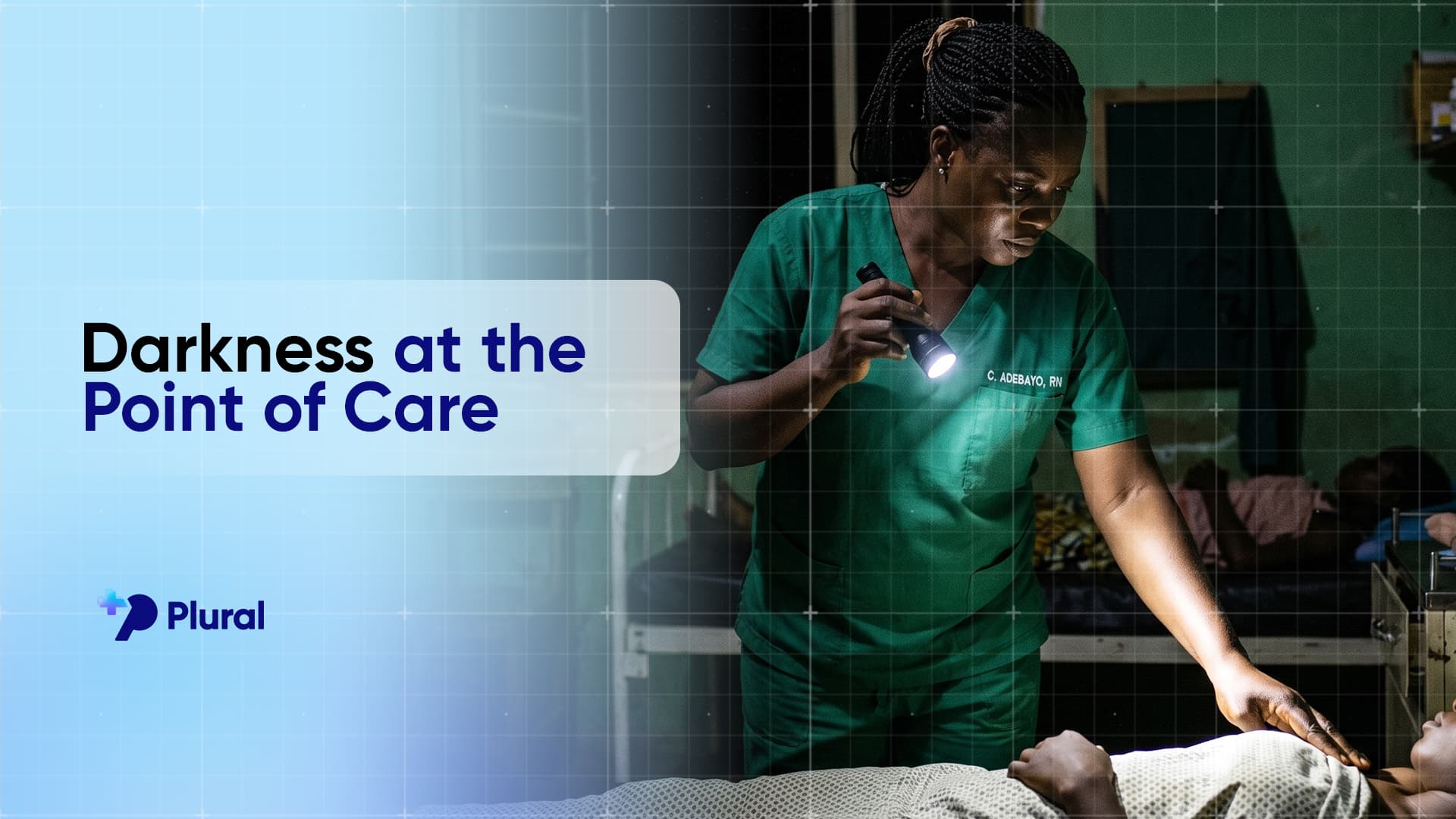
Somewhere in a Nigerian public hospital, the lights go out before sunrise. The nurses have learned to keep torches clipped to their uniforms, to count medication doses by feel, to listen harder when the monitors go silent. They are not negligent. They are adapted to a system in which reliable electricity is the exception, and in which that absence quietly determines what care is possible and what care is not.
Nigeria generates between 4,000 and 5,000 megawatts of electricity for a population of over 220 million, roughly the output of a single large power plant serving a European city of one million. The average Nigerian facility experiences more than 12 hours of outage per day. A 2019 survey by the National Primary Health Care Development Agency found that fewer than 30% of Nigeria's 34,000 primary health care centres had a reliable electricity supply. The rest ran on generators, intermittent solar, or nothing at all. Facilities spend up to 40% of their operational budgets on diesel/fuel money that should be used to buy medications and pay staff.
Cold Chains, Vaccines, and Preventable Death
The most measurable consequence of electricity failure is the collapse of the cold chain. Vaccines must be stored between 2 and 8 degrees Celsius from manufacture to administration. A single outage of sufficient length renders an entire batch unusable. In a country where six- and twelve-hour outages are routine, the cold chain is perpetually at risk. National immunisation coverage sits at 54%, and in northern states where electricity is worst, it falls as low as 13% in some areas. Nigeria accounts for roughly 30% of all zero-dose children globally. In 2022, the country recorded over 15,000 suspected measles cases, the majority in children under five. Behind each figure is a vaccine that should have been cold, in a clinic that should have had power.
Computers, Laptops, and the Digital Collapse
Nigeria has invested in digital health infrastructure, the DHIS2 data reporting platform, electronic medical record pilots, and telemedicine initiatives. In the absence of stable electricity, these investments are largely stranded. When power is present, staff enter records, retrieve patient histories, and file reports. When power fails multiple times daily in most facilities, unsaved entries are lost, records develop gaps, and reporting cycles go incomplete. The patient whose history is fragmented across failed sessions carries that gap into every future consultation.
Battery degradation deepens the problem. Laptops subjected to erratic charging cycles and voltage spikes from generators see their battery life collapse over months. A device arriving with eight hours of capacity may last ninety minutes after two years in this environment. Replacement hardware is expensive, and procurement is slow. A 2022 assessment of telemedicine pilots in three northern states found that power-related failures disrupted over 60% of scheduled remote consultations. The technology existed. The electricity to run it did not.
The data consequences are systemic. A 2020 analysis of DHIS2 reporting completeness found national rates averaging only 62%, significantly lower in states with the worst electricity access. Disease outbreaks go undetected longer. Drug stock-outs are not flagged in time. The facilities most in need of support are the least visible to the planners who could provide it. Electricity failure not only disrupts care in the moment, but it also distorts the entire information environment in which care is planned.
What Darkness Costs
The World Bank estimates that unreliable power costs Nigeria roughly $28 billion annually across all sectors. In health, the cost is measured in outcomes: vaccine-preventable deaths, diagnoses not made, and records lost to a power cut. Nigeria's solar irradiation levels make renewable energy a compelling solution, and the Rural Electrification Agency's Energising Health programme has begun deploying solar mini-grids to health facilities with promising results. But the scale of the deficit, tens of thousands of facilities without reliable power, far outpaces the rate of intervention.
The nurse with a torch clipped to her uniform has found a way to function. The patient on the operating table, when the generator cuts out, has not. The doctor reaching for a laptop with a dying battery has not. Electricity is not a comfort in a healthcare system; it is the precondition for almost everything modern medicine does. Until it is reliably present in Nigeria's facilities, the darkness at the point of care will continue to cost, in the most irreversible currency there is.
A Final Word
The real opportunity in healthcare digitisation is not just better software. It is creating the conditions in which better software can actually do what it was designed to do. Systems rarely break dramatically at the point of design. They break quietly at the point of use in the ward, at the bedside, in the moment a screen goes dark and a record goes unwritten, and a patient carries that gap forward into every consultation that follows.
The nurse has adapted. The system has not. Changing that requires more than goodwill; it requires hardware that works, power that holds, and financing that does not ask an already-stretched facility to pay for everything at once. NeoEHR, in partnership with CredPal, offers electronic health records along with the laptops and power infrastructure to sustain them, on terms that reflect how Nigerian hospitals actually operate.
The darkness at the point of care is not inevitable. It is a deficit. And deficits, unlike the losses they cause, can be addressed.
Learn more: wa.link/mse3oh Terms and conditions apply.
Tags:
About Wumi Arubayi
Contributing author at Plural Health, sharing insights on healthcare innovation and digital health solutions.