
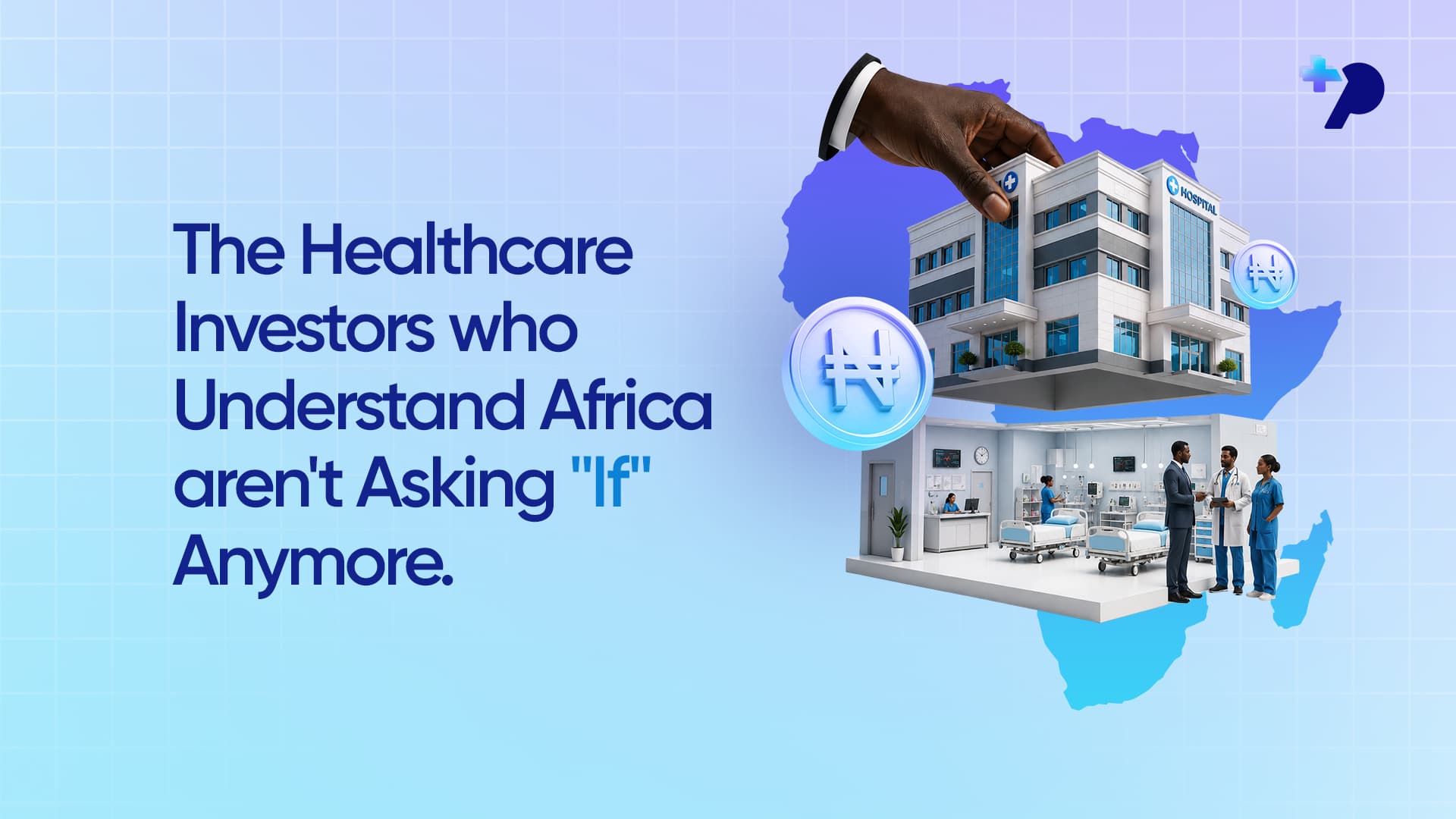
Healthcare Investment in Africa: Where the Smart Money Is Going
Five years ago, discussions about investing in African healthcare mostly questioned whether the market could generate venture-scale returns, given its fragmentation, regulation, and reliance on out-of-pocket payments. At Plural, we've observed that the question fades away. Now, the focus has shifted to which companies, models, and infrastructure will remain relevant in ten years.
This is supported by funding trends: African startups raised about $803 million in 2025, a 43% increase from the previous year. Healthcare played a significant role in that growth, with investments moving beyond fintech into the more challenging area of improving care delivery. The real question now is not if healthcare merits investment but what types of healthcare companies are truly deserving of capital, a conclusion that many outside the sector may underestimate.
Delivery Was the Easy Problem
The first wave of African healthtech went after access: telemedicine apps, digital pharmacies, appointment booking tools. Real gaps, worth solving. But access was always the easier half of the problem. The harder half is what happens behind the appointment, the record that doesn't sync between clinic and lab, the claim stuck in processing for six weeks, the inventory still tracked in a notebook.
That's where we see capital moving now: electronic health records, hospital operating systems, digital insurance rails, clinical workflow automation, revenue cycle management, interoperability layers, AI built into clinical decision-making. None of it is as exciting as a consumer app. It's also far harder to rip out once a hospital depends on it, which is the point. Infrastructure earns recurring revenue, wires itself into daily operations, and becomes expensive to replace.
The Bottleneck Isn't Ideas
Most African health systems aren't short on good ideas. They're short on connection, a lab that doesn't talk to the pharmacy, billing done by hand, patient histories scattered across filing cabinets. Digitizing one department used to count as progress. It doesn't anymore.
We're paying closest attention to companies connecting the whole system: hospitals, insurers, pharmacies, labs, clinicians, patients onto one shared layer. The logic is simple: a network gets more valuable with every participant who joins it. More participants means better retention, richer data, and more room for the next product.
Insurance Is the Structural Story
Out-of-pocket spending is still the norm across much of the continent, which creates uncertainty on both sides: patients unsure what care will cost, providers unsure when they'll get paid. As governments expand public insurance and private insurers digitize, the companies solving claims processing, automated authorizations, fraud detection, and reimbursement are becoming the connective tissue between providers, payers, and patients. Whoever builds that layer well doesn't just win a healthcare deal; they become infrastructure the rest of the system runs through.
AI Is Useful Where It's Boring
Investors have gotten more skeptical of the flashy AI demo. What's gaining real traction is narrower: clinical documentation, imaging support, triage, administrative automation, predictive and population health analytics. The winners won't have the most sophisticated model; they'll be the ones that fit into how a clinician already works, saving time and staying invisible enough that nobody has to think about the AI at all.
The Map Is Bigger Than Four Countries
Nigeria, Kenya, Egypt, and South Africa still absorb most venture funding, but healthcare demand doesn't respect that concentration. Founders building for one country's regulatory environment will hit a ceiling faster than those designing for interoperability across borders from day one.
What This Means If You're Raising
Capital has come back, but it's more selective now. A big slide about the size of the problem doesn't win anyone over anymore; every founder has one. The investors getting this right are looking for something else: a founder who understands healthcare like an operator, not just a builder, someone with a real plan for regulation, numbers that hold up without a subsidy, genuine relationships with clinical partners, and a product that fixes something broken in the system rather than adding one more feature. The growth-at-all-costs era is over. What matters now is simple: run the business well, and make it stronger, not just bigger.
Where This Goes
Africa's healthcare systems are genuinely broken in places that are uncomfortable to sit with, but it's exactly why the opportunity is real rather than theoretical. The companies that matter in ten years won't have the most features. They'll be the infrastructure, the layer hospitals, insurers, and patients all touch, whether they think about it or not. That's the bet we're making at Plural: the next chapter of African healthcare gets written by the businesses that connect providers, payers, pharmacies, labs, and patients into one system that actually talks to itself.
Tags:
About Collins okeh
Contributing author at Plural Health, sharing insights on healthcare innovation and digital health solutions.