Healthcare Collects the Data. So, Why Is 47% of It Going to Waste?
The Paradox at the Heart of Modern Healthcare
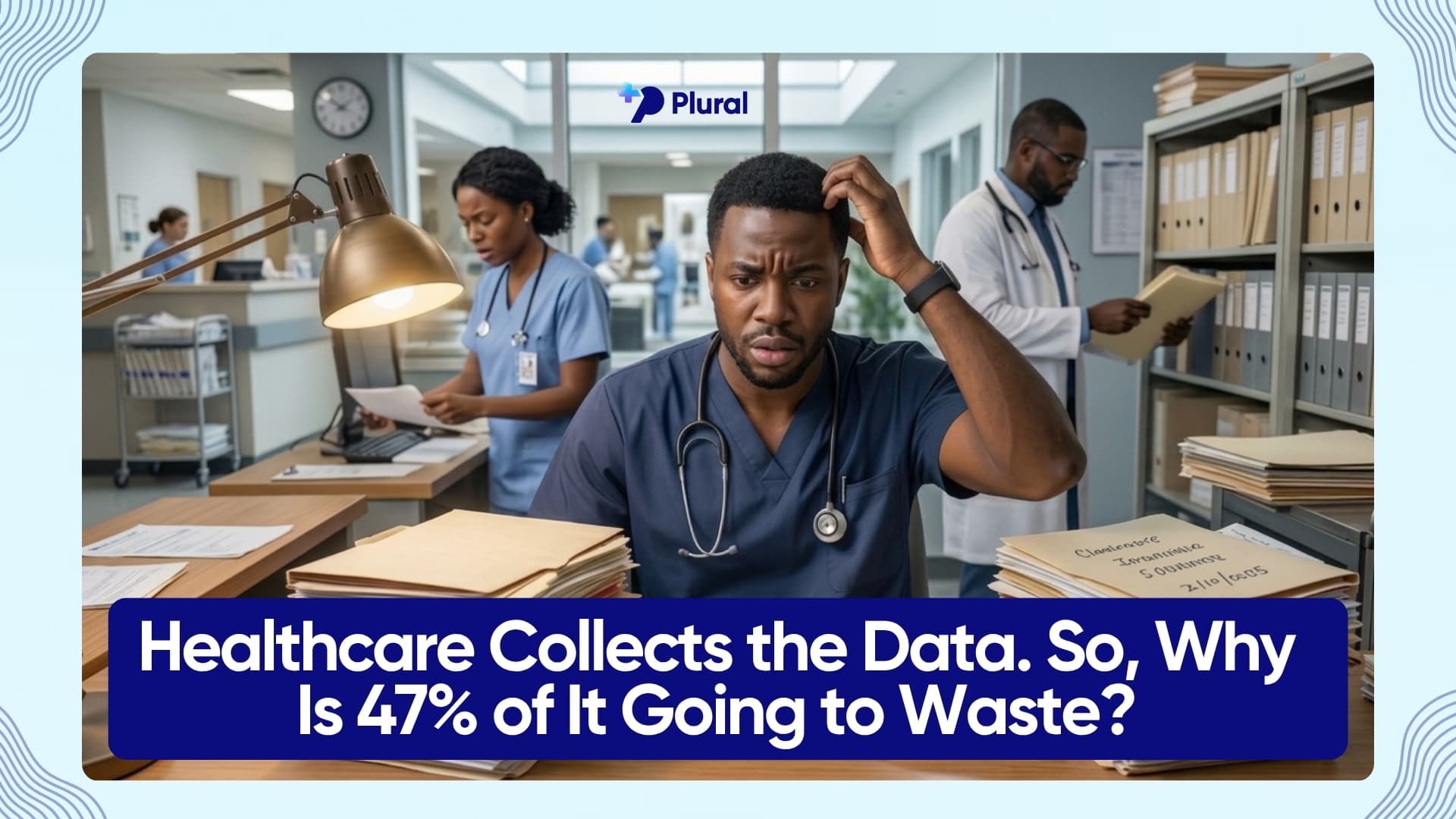
Imagine a hospital with thousands of patient records, real-time lab results, prescription histories, and insurance claims all digitally stored and theoretically accessible. Now imagine that despite all of this, a clinician still makes a key treatment decision based largely on experience and intuition.
This is not a hypothetical. It is the reality for the majority of healthcare organisations today.
According to a 2024 study by Arcadia, conducted in partnership with HIMSS (Healthcare Information and Management Systems Society), 47% of healthcare data is underutilised when making clinical and business decisions, and this is despite 80% of healthcare leaders believing their data is accurate. The data exists. It is trusted. It is simply not being used.
In an industry where decisions directly affect patient outcomes, that gap is one we can no longer afford to ignore.
The Data Collection Boom and Its False Promise
Over the past decade, healthcare has undergone a data revolution. Electronic health records, wearable devices, diagnostic imaging, pharmacy management systems, and insurance platforms. The volume of health data being generated every day is staggering.
The assumption driving this boom was simple: collect enough data, and better decisions will follow. More information means less uncertainty. Less uncertainty means better care.
That assumption has not held up. Collecting data and using data are two very different things, and the gap between them is wide.
The Real Problem: Having Data Is Not the Same as Using It
Healthcare organisations are not failing because they lack data. They are failing because the data they have is difficult to access, difficult to trust, and difficult to act on. The result is a systemic gap, not a technology gap alone, but an operational and structural one between data collection and data-driven decision-making.
The Arcadia and HIMSS research makes this clear: even when leaders trust their data, nearly half of it still goes unused. The bottleneck is not accuracy it is accessibility, integration, and actionability.
Six Reasons the Gap Persists
Understanding why this gap exists is the first step to closing it. Here are the six most common barriers:
1. Fragmented systems Patient data is rarely stored in one place. Hospitals, laboratories, pharmacies, and insurers each hold different pieces of the picture and rarely do these pieces come together in a coherent, usable way.
2. Poor data quality Even within a single hospital, patient information may be recorded differently across departments admissions, labs, and pharmacy each with their own formats and conventions. Before this data can be used, it needs to be cleaned, completed, and standardised. That takes time and resource that most organisations do not have in abundance.
3. Disconnected systems Many healthcare platforms simply do not communicate with each other. A prescription issued in one system may never be visible to the pharmacist, insurer, or patient app sitting in another. Data stays locked in silos, unable to flow across the full patient journey.
4. Time constraints Healthcare professionals are under enormous pressure. If accessing data requires navigating multiple systems, logging in and out of different platforms, or waiting for reports to load they will not use it. In a busy ward, speed matters, and gut feeling is faster.
5. Lack of data literacy Not everyone working in healthcare has been trained to interpret data or translate it into decisions. When people do not feel confident using data, they default to what they know experience and intuition.
6. Privacy and compliance pressures Strict regulations such as GDPR create a well-founded caution around how data is used and shared. Without clear governance frameworks and the right technical safeguards, organisations become hesitant and that hesitancy often results in data going unused altogether.
The Real Cost of Not Closing the Gap
Solving this problem is not straightforward. Closing the gap requires upgrading legacy systems, integrating multiple platforms, migrating data, and ensuring everything works together seamlessly. It requires investment in staff training, data governance, and ongoing maintenance. And it requires navigating strict regulatory requirements at every step.
This is why many organisations struggle to act. The cost of change feels high and it is.
But the cost of inaction is higher. When nearly half of all available data never informs a single decision, the consequences show up in delayed diagnoses, medication errors, inefficient resource allocation, and ultimately, poorer patient outcomes. These costs are harder to measure on a balance sheet but they are very real
So the problem is clear. The barriers are real. But they are not insurmountable.
The question is: what does it actually look like when a healthcare system gets this right?
What happens when the silos come down, the systems connect, and data finally flows the way it was always meant to?
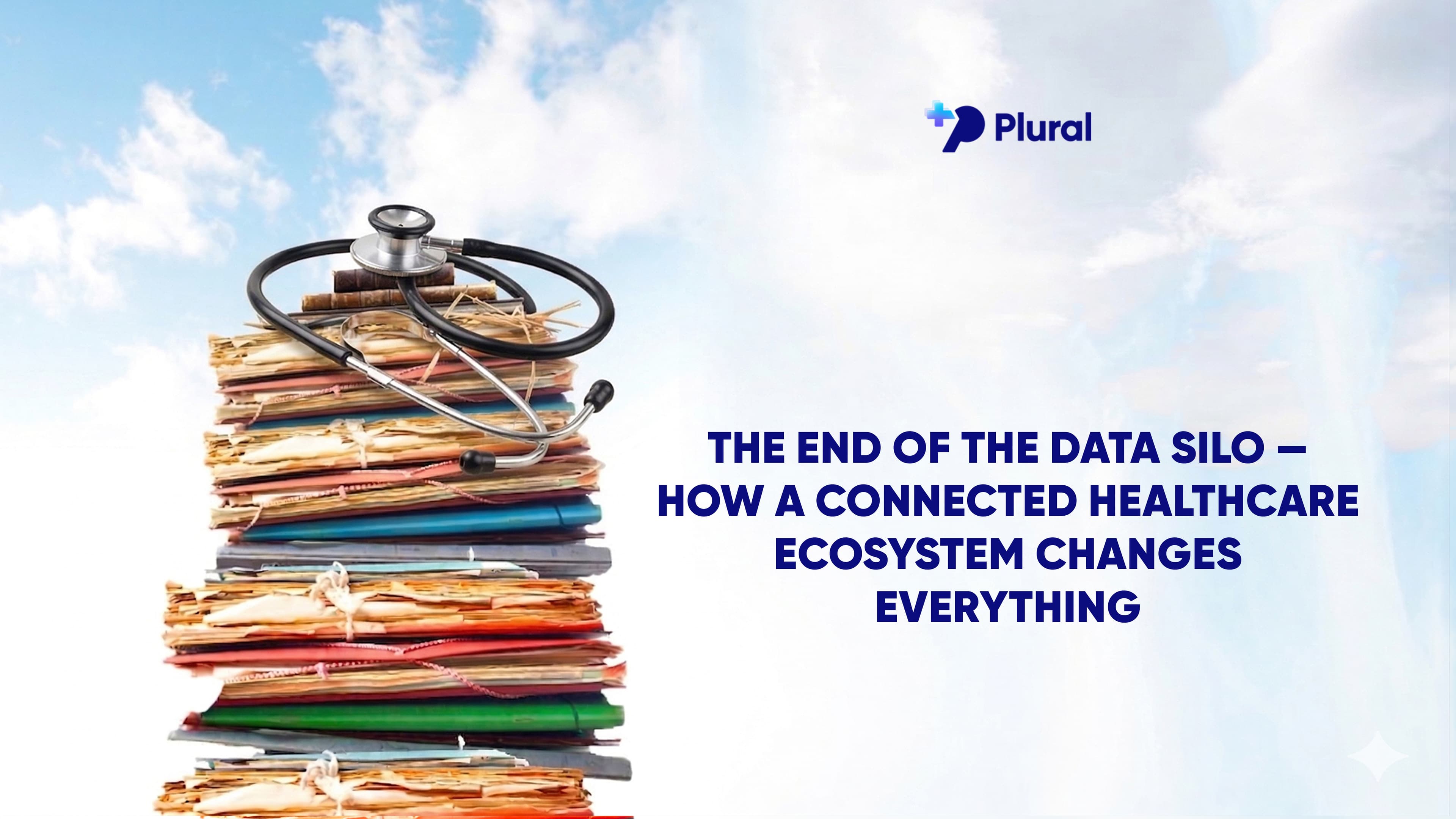
In Part 2, we explore exactly that The End of the Data Silo: How a Connected Healthcare Ecosystem Changes Everything
Tags:
About Wumi Arubayi
Contributing author at Plural Health, sharing insights on healthcare innovation and digital health solutions.