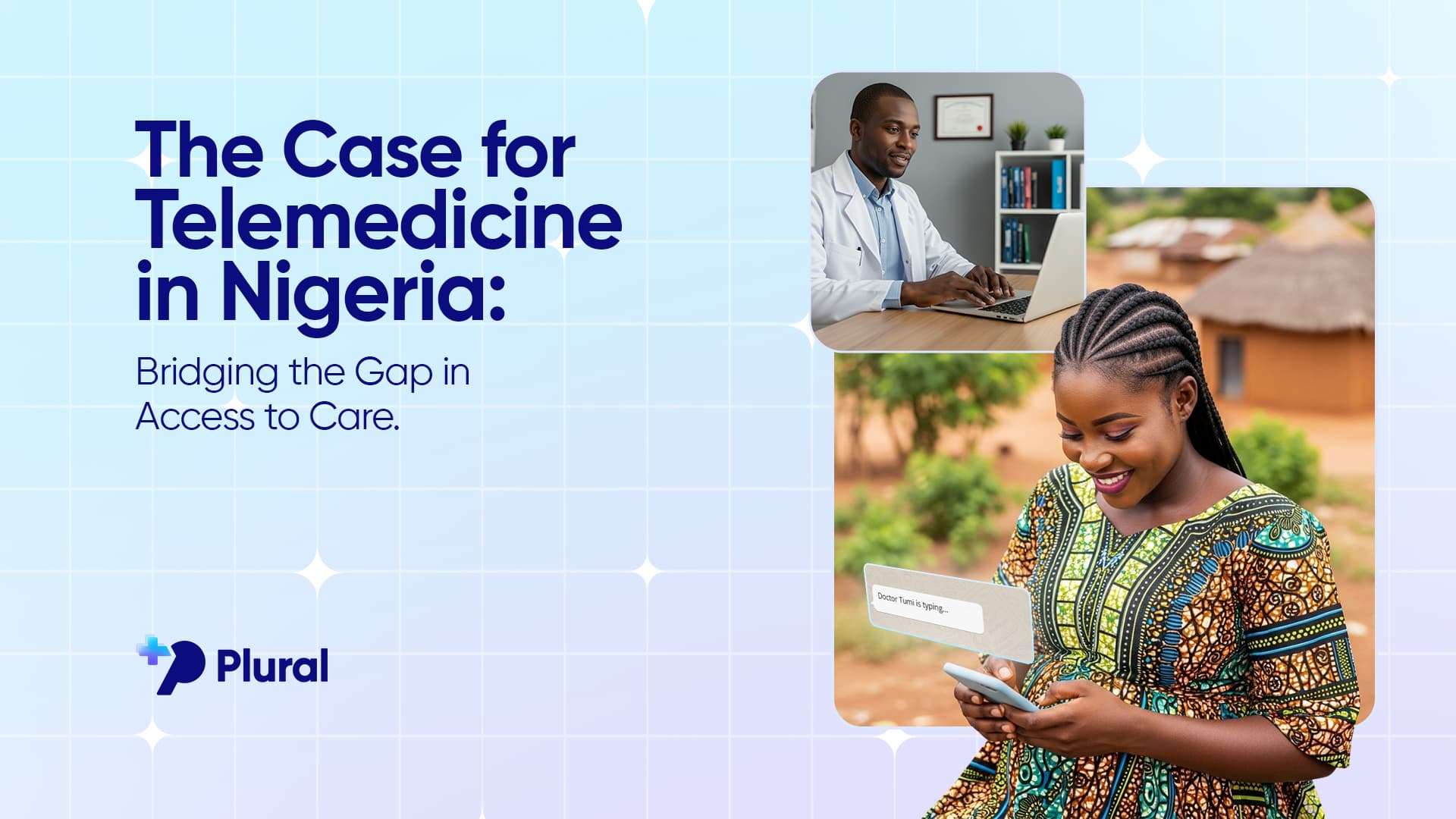
The Case for Telemedicine in Nigeria: Bridging the Gap in Access to Care
Somewhere in rural Kebbi State, a pregnant woman is deciding whether to travel four hours to the nearest hospital or stay home and hope. In Lagos, a man with uncontrolled hypertension skips his clinic appointment because the queue starts before dawn and he can’t afford to lose a day’s pay. In Enugu, a nurse handles 80 patients a day because three colleagues left for the UK last quarter.
These are not edge cases. They are everyday realities. And they are the reason why telemedicine in Nigeria is not a convenience story; it is a survival story.
The Problem: A System Under Extreme Pressure Nigeria’s healthcare system faces a crisis that no single intervention can fix. The numbers tell part of the story:
-
1 doctor per 5,000 people (WHO recommends 1:600)
-
1 nurse per 2,000 people (WHO recommends 1:300)
-
4,193 doctors emigrated in 2024 alone, a 200% surge
The figures above represent a system in structural crisis. But numbers alone do not capture the full weight of it.
A Nigerian woman faces a 1-in-22 lifetime risk of dying from pregnancy, compared to 1 in 4,900 in most developed countries.
75% of Nigeria’s healthcare workers are concentrated in urban areas, serving just 45% of the population. Rural communities carry the heaviest burden with the fewest resources.
Brain drain continues to accelerate the problem. Over 12,000 Nigerian doctors are now practising in the UK. The resident doctor workforce has shrunk from 15,000 to approximately 8,000 in the past decade.
The Nigerian Medical Association estimates it would take over 15 years of sustained training without further emigration to close the gap.
This is the context in which telemedicine must be evaluated. Not “is it better than ideal?” but “what is it replacing?” because for millions of Nigerians, the alternative to a virtual doctor is no doctor at all.
What Is Telemedicine?
In simple terms, speaking to a doctor remotely via phone, video, or app without going to a hospital.
It includes virtual consultations, remote monitoring of chronic conditions, digital prescriptions, mental health support, and pharmacy delivery.
Nigeria’s digital health market was valued at US$770 million in 2024, with over 12 active telemedicine startups and more than 5,000 Nigerians employed in the sector.
This is not a future story. It is already happening.
Where Telemedicine Is Making a Real Difference
- Cancer Care - Reaching Patients Who Had No Other Option
Nigeria records over 269,000 new cancer cases annually, but has only 27 cancer treatment centres for a population of over 200 million.
For many patients, travelling to Lagos or Abuja is simply not an option.
Teleoncology has been shown to reduce patient costs by up to 10%, eliminating travel and accommodation expenses in a system where over 90% of healthcare is paid out-of-pocket.
- Chronic Disease Management - Consistency Over Distance
Diabetes, hypertension, and cardiovascular disease account for nearly one-third of deaths in Nigeria. These conditions require consistency - not just access.
Telemedicine is already expanding access, reaching over 30% of patients with hypertension and diabetes through remote care.
A 2024 study published in a BioMed Central (BMC) journal supports this, piloting mobile hypertension training for primary healthcare workers in Nigeria and improving both patient access and frontline healthcare capacity.
Virtual prenatal care pilots in Nigeria have also been associated with a reported 20% reduction in maternal mortality in some trial areas.
- Mental Health - Breaking Through Stigma and Distance
Over 80% of Nigerians with a diagnosable mental health condition receive no care at all. Nigeria has approximately one psychiatrist per one million people.
Telemedicine doesn’t eliminate stigma - but it makes care accessible despite it.
A person who would never enter a psychiatric ward may still open an app from the privacy of their home.
Organisations like Mentally Aware Nigeria Initiative (MANI) have successfully pivoted to digital platforms - using WhatsApp groups, hotlines, and virtual communities to reach users.
Over 7 million Nigerians have been reached through virtual mental health platforms.
What Telemedicine Cannot Do
Honesty matters here.
Telemedicine cannot replace emergency care, physical examinations, surgeries, procedures, laboratory tests, imaging, or diagnostics.
And in Nigeria’s context, practical barriers remain:
-
Only around 50% of Nigerians have reliable internet access
-
Over 90% of rural communities lack stable electricity
-
Low digital literacy limits adoption in older populations
-
Trust gaps and regulatory uncertainty around data privacy remain
-
The 2025 health budget allocates just 5% to digital health
A 2025 review of 230 digital health studies in Nigeria found that while research and innovation are growing, real-world implementation remains limited.
Enthusiasm does not automatically translate into impact.
The Government’s Role: Why Policy Cannot Wait
Without policy action, telemedicine risks becoming a solution for the few - not the many.
To scale impact, key actions are required:
-
Increase healthcare funding toward the WHO-recommended 15%
-
Integrate telemedicine into the National Health Insurance Scheme
-
Invest in broadband and electricity infrastructure
-
Establish clear regulatory frameworks for data privacy and clinical standards
-
Strengthen public-private partnerships
Conclusion: A Necessary Bridge, Not a Silver Bullet
Telemedicine will not replace the specialist that the woman in Kebbi needs.
It will not stop a doctor from boarding a flight to London.
It will not build the hospital that should already exist.
But it can reach her before a crisis begins.
It can give the man in Lagos access to care without losing a day’s income.
It can extend the reach of a healthcare system already under strain.
The real opportunity is not telemedicine versus physical healthcare - it is both, working together.
Because in Nigeria today, telemedicine is not replacing care. It is making access possible.
Tags:
About Wumi Arubayi
Contributing author at Plural Health, sharing insights on healthcare innovation and digital health solutions.